
Home > Insights > The future of industrial fire safety
Conference Review · Industrial Fire Safety
The future of industrial fire safety: key insights from the SFPE Benelux Conference 2026
How should industrial fire safety evolve as technology, energy systems, and society itself continue to change?
SFPE Benelux
·
Conference held on 21 September 2026
·
Antwerp, Belgium
Strategic risk management
Fire engineers are becoming multidisciplinary risk strategists.
Safe energy transition
New energy infrastructure requires safety to evolve at equal speed.
Human-led technology
AI, data, drones, and robotics must strengthen professional judgement.
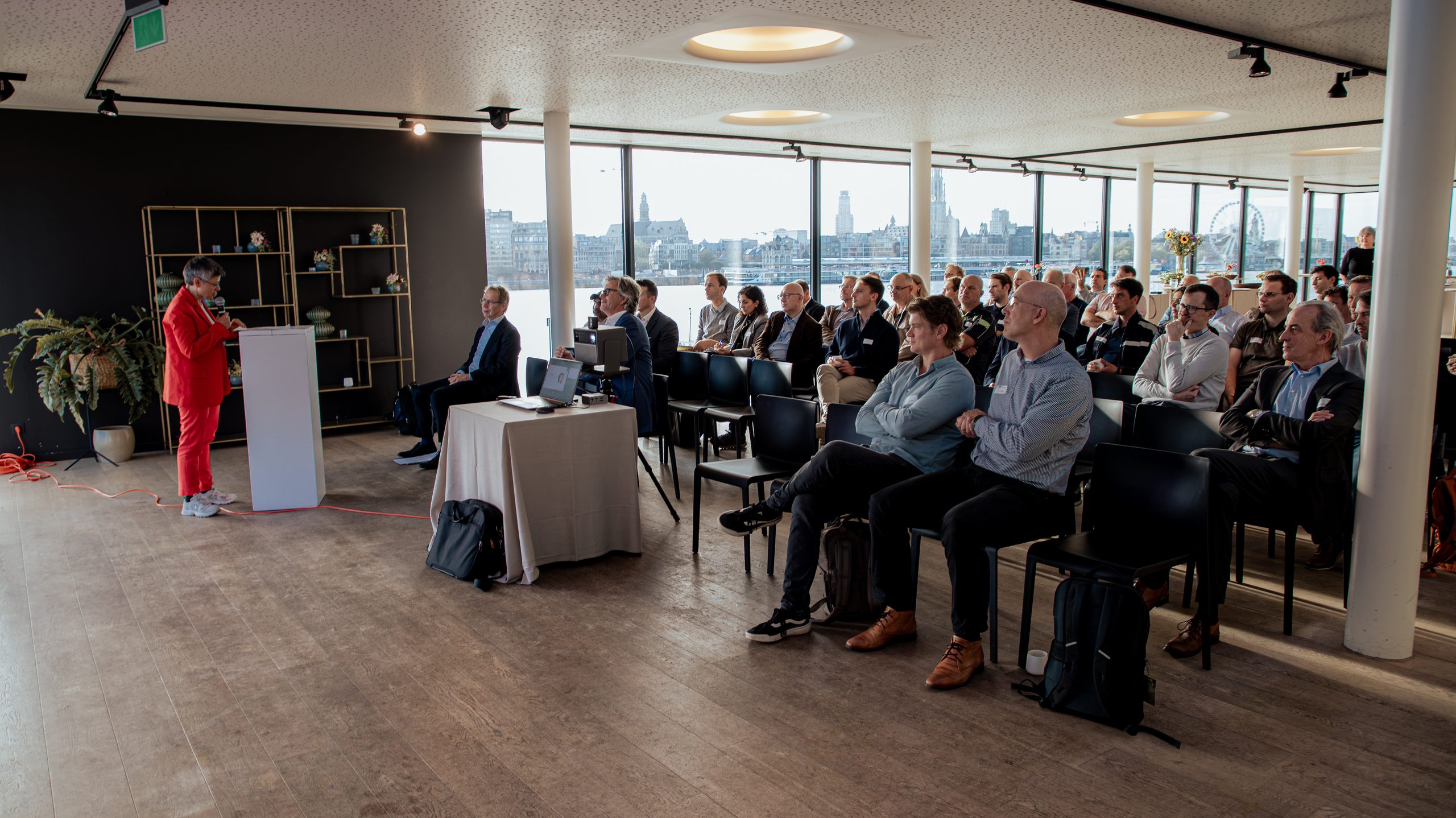
That question was at the centre of the SFPE Benelux Conference 2026, held on 21 September at Club Royal in Antwerp. Under the theme “The Future of Industrial Fire Safety & Emergency Management”, fire safety engineers, emergency services, industrial operators, insurers, technology specialists, and public authorities came together for a full day of knowledge sharing and discussion.
The programme brought together perspectives from SFPE Benelux, FM, the Port of Rotterdam Authority, ReplyFabric, VTTI, and Antwerp Fire Service. Topics ranged from the changing role of the fire engineer and the energy transition to artificial intelligence, autonomous emergency response, and the future organisation of fire services.
The future of industrial fire safety will be more digital, more interconnected, and more complex. Its foundations remain sound engineering, professional judgement, and collaboration.
From compliance to strategic fire risk management
Ralf Bruyninckx, President of SFPE Benelux and Business Development Manager at Sweco, opened the technical programme by looking towards the role of the fire safety professional in 2035.
His central message was that industrial fire safety can no longer be approached as an isolated technical discipline. Fire engineers increasingly operate at the intersection of structural engineering, mechanical systems, electrical infrastructure, process safety, operations, cybersecurity, human behaviour, legislation, and finance.
Industrial projects also bring different stakeholders around the same table. Operators focus on production continuity, insurers on limiting exposure, emergency services on accessibility and response capabilities, regulators on demonstrable compliance, and employees on personal safety. The fire engineer increasingly has to connect these perspectives and translate them into one coherent risk strategy.
This requires a shift from the traditional role of compliance specialist towards what Ralf described as a Fire Risk Strategist: a professional combining fundamental fire science with data analytics, AI literacy, cybersecurity awareness, risk economics, multidisciplinary communication, and sound engineering judgement. Technology can support that transition, but it does not replace the fundamentals.
Innovation is changing the insurance perspective
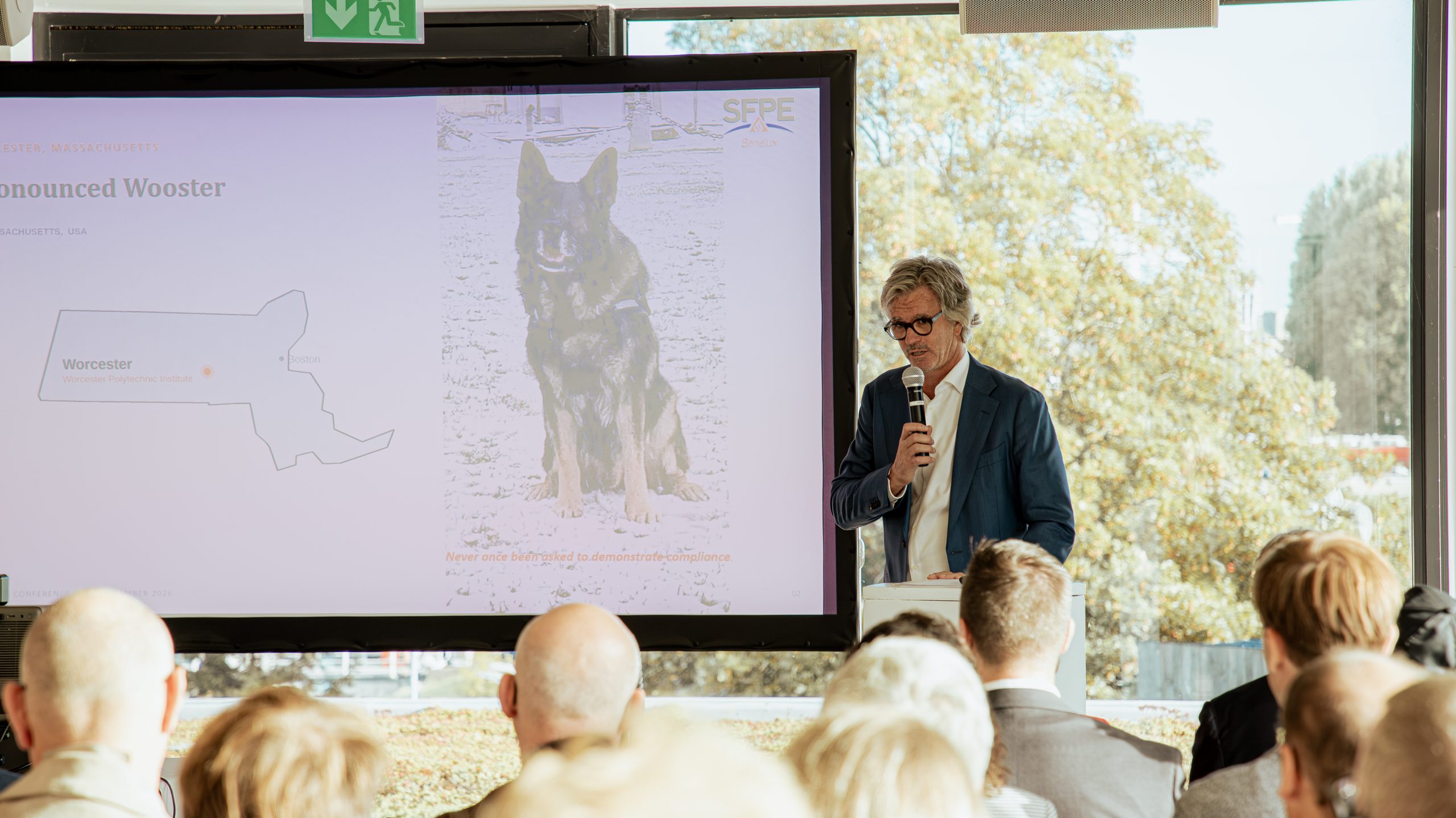
Jaap De Vries of FM examined industrial innovation from an insurance and risk engineering perspective. Automation, electrification, hydrogen, lithium-ion batteries, and increasingly intelligent control systems are changing industrial risk profiles at considerable speed.
Historical loss experience remains valuable, but it cannot provide every answer for technologies and applications that are still developing. Risk engineering and loss-prevention expertise should therefore be involved early. New technology must be technically possible, understandable, manageable, and ultimately insurable. Risk management should develop alongside innovation rather than being added after implementation.
The energy transition is also a fire safety transition
Alan Dirks of the Port of Rotterdam Authority brought the discussion into one of Europe’s most complex industrial environments. Ports such as Rotterdam are moving from traditional oil and gas activities towards hydrogen, ammonia, alternative fuels, electrification, and circular industrial processes.
This transition is essential, but it introduces new hazards, infrastructure, and interfaces between existing and emerging technologies. Conventional installations and new energy infrastructure will coexist for many years, often within limited physical space and interconnected logistics networks.
A safe transition requires early collaboration
Fire safety professionals, port authorities, industry, regulators, and emergency services must become involved early enough to understand new scenarios and design appropriate prevention, mitigation, and response measures.
Artificial intelligence for predictive fire safety
Tom Vanderbauwhede of ReplyFabric explored the role of artificial intelligence and machine learning in predictive industrial fire safety. AI can help organisations move from periodic assessment towards continuous monitoring and earlier identification of abnormal situations.
Industrial data, sensors, and digital systems can support pattern recognition, scenario analysis, and decision-making before an incident escalates. A consistent principle nevertheless emerged throughout the conference: technology should strengthen human decision-making rather than remove responsibility from it. Data quality, transparency, and professional judgement remain crucial in safety-critical environments.
Towards technology-supported industrial firefighting
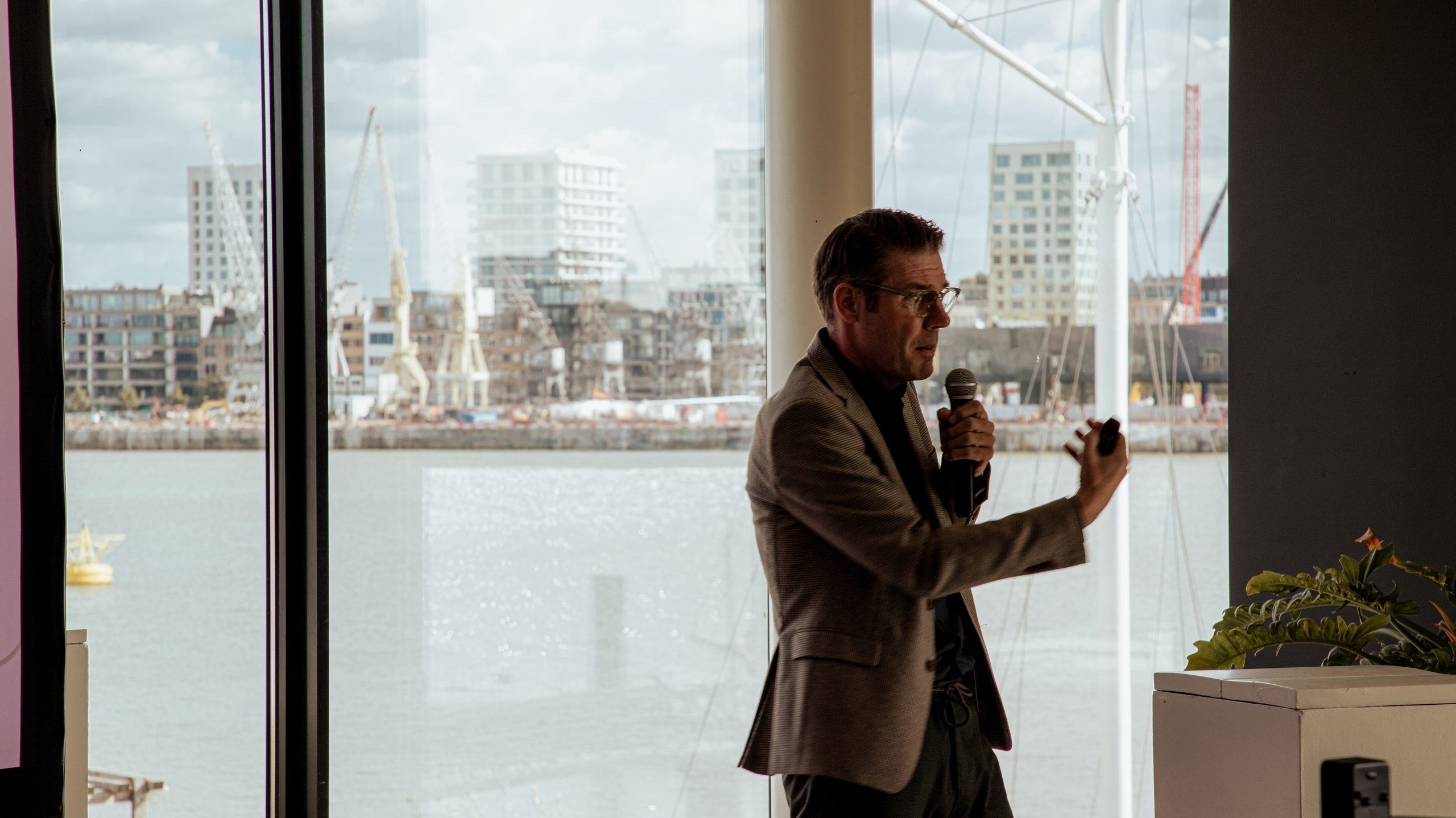
Margit Blok of VTTI reviewed the evolution of firefighting at large industrial storage facilities: from firefighters physically approaching tank fires to long-range monitors, remotely operated equipment, and increasingly autonomous systems.
Robots and unmanned ground vehicles can operate in conditions that would present unacceptable risks to people. Drones can provide thermal imaging and reconnaissance before emergency crews reach an incident, giving commanders additional information and valuable time.
By 2030, this could support more dynamic strategies built around real-time information, robotics, remote command centres, and AI-assisted interpretation. Sites must be designed so unmanned equipment can work effectively. Accessibility, water supply, equipment positioning, communications, and worst-case scenarios therefore become interconnected design considerations.
Building the capacity to adapt
Bert Brugghemans of Antwerp Fire Service approached the future from an emergency-services perspective. Antwerp illustrates the complexity modern fire services face: a major industrial cluster, a densely populated urban environment, and highly interconnected infrastructure exist side by side.
The risk landscape is changing through climate effects, new industrial processes, energy technologies, and growing societal dependencies. Complexity continues to increase while emergency-response resources remain finite. His message was therefore not that every future incident can be predicted or prevented, but that organisations must build the capacity to adapt.
People remain the foundation of emergency response. Technology can extend what they can see, understand, and safely achieve. Local fire services, industrial brigades, and specialised regional, national, and international partners also need scalable networks through which capabilities, equipment, training, and expertise can be shared.
Demonstrating safety in a complex world
Several presentations converged on a similar conclusion: compliance remains essential, but compliance alone is not enough. As industrial systems become more complex and technology develops faster than prescriptive rules, organisations increasingly need to demonstrate why a particular solution is safe.
That requires knowledge, competent engineering, performance-based thinking, appropriate regulation, and cooperation between everyone involved in the safety system. Tomorrow’s professionals must understand not only individual hazards, but the complete system surrounding those hazards.
Connecting the Benelux fire safety community
The conference concluded with a panel discussion bringing together perspectives from VTTI, Antwerp Fire Service, FM, the Port of Rotterdam, ReplyFabric, and the wider fire safety community.
That exchange reflects an important part of the SFPE Benelux mission: connecting professionals across disciplines and national borders, strengthening fire safety engineering, and creating opportunities to exchange knowledge on rapidly developing risks.
The Antwerp conference made one point particularly clear: the future of industrial fire safety will be more digital, interconnected, and complex. But the fundamentals remain the same: sound engineering, strong professional judgement, and collaboration between the people responsible for preventing, managing, and responding to risk.
Article details
Topic
Industrial fire safety and emergency management
Conference
SFPE Benelux Conference 2026
Contributors
- Ralf Bruyninckx
- Jaap De Vries
- Alan Dirks
- Tom Vanderbauwhede
- Margit Blok
- Bert Brugghemans
Join the network
Connect with fire safety professionals and contribute to the development of the profession.
Continue the conversation
Next expert meeting: batteries and energy storage systems
The next SFPE Benelux Expert Meeting takes place on 7 October 2026 and focuses on the energy revolution and the fire safety challenges associated with batteries and energy storage systems.
7 October 2026 · Van der Valk Utrecht

Help shape the future of fire safety engineering
Join SFPE Benelux to exchange knowledge, connect across disciplines, and contribute to safer industrial environments throughout the region.